October 27, 2009

I Wag for Wag'N
Guest Post By Kamran Smith
www.SkyDogSit.com


Last Saturday (Oct 24, 09), I took Ines' Pet Saver (extensive Pet First Aid) class and came away with my brain stuffed with new knowledge. STUFFED!
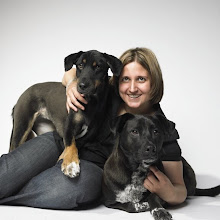
And one doesn't usually describe a first aid class as "delightful," but watching Ines interact with MayDay and Gypsy, her two dogs, was a hoot. Ines uses both dogs to demonstrate how you can find a dog's femoral pulse, how to make and apply a muzzle, and how to bandage wounds. The look of martyrdom on Gypy's face as she was bandaged up was priceless! The patient sighs, the sad eyes, the dull look that brightened when Ines mentioned "chicken!" All this lead to the eager munching of the promised chicken treat and then back to her bed before Mamma Ines once again asked her to come upfront for another demo.
More sighing, more fake "sad" looks, and the whole cycle started again. The humor aside, it's always heartwarming to see well-loved, well-trained dogs like Gypsy and MayDay.

I loved that fact that the class included plush doggies that we could perform CPR and rescue breathing on. While it was funny to see Ines handing out toy dogs to the class, those cute critters were incredibly useful. For the first time, I was able to "perform" breathing and CPR on both a small and large dog ... and learn how to position the dog, how it would feel to do the chest presses, etc. That was invaluable experience. I also appreciated that Ines and Vet Tech advocate approaching a prone dog from the rear, rather than bopping right up to the front end and hence, the face and big, sharp teeth.

Also, Ines taught a lot about keeping ourselves safe when performing first aid -- how to position our arms to leave one free to push a snapping dog's face away if necessary, for example.

There was so much information in the class. Toward its end, I was tired and wanted to yell, "STOP!" But I'm so glad I didn't, being that it would not only be socially odd to do so, but also because I did actually retain all that information and nothing was excessive or not
important. Ines pointed out that if we scanned through the first aid book when we got home, we could increase our retention rate. She was absolutely right! And of course, practice, as she emphasized is important to, so I guess it's in the cards for me to get a plush dog.
(Oddly enough, Ines does NOT loan out Gypsy and MayDay, despite our pleas.)

Take the class ... you'll be glad you did and it will start you thinking about not only pet first aid, but also, pet care and disaster preparation. And, of course, you too, now have an excuse to get
yourself a plush dog!

To Read More of Kamran's Posts check out her Blog
(Pet)Sit and Chat: Petsitting and Life


July 30, 2009

Book Review: Don't Dump The Dog

Don’t Dump The Dog
Outrageous Stories and Simple Solutions to Your Worst Dog Behavior Problems
By Randy Grim

Book Review by Ines de Pablo

July 30, 2009

Get your copy here

Hi all! Skyhorse Publishing contacted me to write a book review about a book called “Don’t Dump The Dog” a couple of weeks ago. The book arrived at my office on July 29 and by the end of the day I had read the whole thing! What a great book! It took me about 2 hours to finish it, mostly because I was laughing so much! Randy Grim did an outstanding job covering the most outrageous reasons why people dump their dogs. As outrageous has the reasons may be, Randy’s responses, solutions and reasoning is nothing short of priceless!

Wagn4u have been on Twitter since January of 2009. Sometime earlier this year I found a post via Twitter related to this issue. It’s a Shelter Rant by a shelter manager that first appeared on Craig’s List and was making the rounds. A copy can be found here. When I first read this rant I felt that someone finally has the courage to say it like it is. The reality is raw. So is the rant.
Randy Grim does cover all of the same issues. The stories he uses to back up his arguments are hilarious – in a serious kind of way. If you don’t get the message, you just don’t GET IT!

I have to admit that the one excuse that aggravates me THE MOST is the “We are moving and we can’t take our dog (or cat) because the new building doesn’t accept pets”. If something gets me MAD that would be the one. No Wag’N about it!

Pets have issues. People have issues. That’s part of the package. We are not born knowing the answers to all problems. We learn. That’s life. If you don’t have the solution to your pet’s behavioral issue, seek help…not abandonment! There is no “secret farm the shelter will send your relinquished pet to”! Shelter life is horrible!

One of my favorite lessons learned and fantastic ideas offered in this book is in Chapter 1: A.D.D. Dogs.
An owner contacts Randy wanting to relinquish his dog because of hyper-activity issue. The owner comes by the shelter on a day where Randy is alone at the shelter, clearly overwhelmed by work and asks the pet owner to answer the phone while he brings the “abandoned pet” to its new home – The cage. While there the owner takes many dramatic calls covering a few “real emergencies”. When the owner gets a break he drops the phone, runs back, frees his dog, gets another dog and runs out of the facility. The owner realized that the issue he deemed terrible was nothing compared to the realities shelters have to deal with. He later sent money to the shelter to thank them of the invaluable knowledge he acquired that day.
Putting things in perspective: of course letting a random person answer the answer the phone and snatch another dog isn’t perfect shelter management but abandoning a pet is completely irresponsible!

MY RECOMMENDATION: Shelters should make it mandatory for people who relinquish pets for NO good reason work at an animal shelter for at least 4 rotations. (Some of which are “having a baby”, “My dog is boring”, “my dog is no longer cute”, “my dog is old. I want a new one in exchange”, “we don’t want to put up a fence”, etc).
This recommendation, alone, is however insufficient and not all encompassing. The following addition needs to be made and is addressed to shelters, with who some of the responsibility also rely. New pet parents need to be given some tools by the shelter/breeder to help them in this adventure. We are not asking shelters to provide training. However I could conceive that a local dog trainer could teach some classes at their local shelter every so often. Who knows…maybe some of the proceeds could go to the shelter. Otherwise use referrals. Another great non expensive venue would be a blog for all those who adopt from that facility to post their questions, experiences, solutions, etc. Some monitoring would be required but all you need once its up is a flyer providing the information.
Randy recommends shelters provide tips on what to expect. Spay and neuter workshops are another option.

Chapter 12 is another one of my favorites as I am going to start teaching safety around dogs to kids this fall. Interpreting how the dog feels when you do something that you (kid) consider normal and sweet can save your child and your pet. No doubt about it. Humans have a tendency to project on others what they deem logical to them should be logical to the dog. You are dealing with a completely different RACE so please read this chapter carefully. Your best intentions can do harm. Teach your kids to think like a dog. Understand the dog as it is. Once you start viewing the world in the dogs eyes, things will make more sense. If you don’t believe me, get on your knees and walk around. Have an adult stand up straight in front of you and have him/her speak at different tones, approach you at different speeds, play a foreign movie super loud in a language you don’t understand and maybe toss you some food. If you feel very courageous try some kibble…ickyboo!

You need to read this book if
- This is your first pets adoption – regardless of where you get it from
- Your pet drives you up the wall and the thought of relinquishing it creeps in
- Your significant other asks you to give it up
- You know someone that is about to do something crazy
- A new human child comes into the picture and you have doubts about the pet
- Your kids and the pet have issues (then you might want to jump to chapter 12: Scaredy Cat)
- Your dog has dominance issues with you and on and off leash
- Your dogs barks at everything.
- You get a former stray dog that is super shy
- You wonder whether or not to spay or neuter
- Your dog has “bladder control issues” in the house
- You didn’t realize that more than 27,000 animals are destroyed every DAY in this country
- You think there is such a thing as a “secret farm” where the shelter will send your pet
- You feel like reading a fantastic book
All chapters are worth reading!

When we human make mistakes – including some pretty bad one like DUIs, assault, battery etc - we get a fine, a lecture, maybe some jail time. If a dog bites a human it pays with it life. Most incidents are our fault! We didn’t see it coming. We didn’t bother to train it as a puppy because it was so damn cute at the time. We can’t understand what warning they are giving us. They talk to us all the time! Open your mind and your heart to make our lives with them better and spare them from abandonment.
If that’s not enough, consider this. Don’t do to others what you don’t want done to you. Treat you fellow being like you would want to be treated! These furry guys have a heart beat, lungs, livers, kidneys, eyes, ears, stomach, brains and feelings. Pain and Death suck for all!


… SOME MORE THOUGHTS
If you had a human child, and you HAD to move, would you pick a building that doesn’t allow kids? And yes these types of facilities, hotels and BNB do exist! If you answer yes… let’s just say now would be a good time to get off this site and seek counseling! Common sense, morale, basic intelligence and reason would dictate that you wouldn’t just dump the kid! That makes sense right? It’s your kid. Whether it was planned for or not it’s a life that depends on you. It’s your flesh and blood! Not a vacuum cleaner! So why in the world wouldn’t you extend the same courtesy to a furry, four legged (or 2 legged if bird) creature from a different race than yours? THAT’S ACTUALLY RACIST (Human beings being a race and all)

Wag’N Enterprises was created to promote Responsible pet ownerships. When do you make the decision to adopt an animal you automatically become responsible for it for all of its life, through sickness and in health. Pets are fantastic. If you cannot make a 15 year commitment you probably should think about getting married and you should definitely not get a pet in the first place. Puppies are super cute. A well trained adult dog is fantastic and super cute. Pets are like children. The consequences of not raising and training your four legged friend will make themselves obvious. But like with the child, it will be your fault. Abandoning that responsibility is like blaming everyone else for your lack of commitment. Not Cool! Humans and dogs have been partners since before mortgages, economies, cell phones, apartments, condos, the internet, mirrors, pubs, artificial deadlines and all those things we consider our normal way of life. You DO have time to walk, exercise, play and train that animal.
Read this book. Be responsible. Keep your family, loved ones and neighbors safe. Keep your pets Wag’N!


EXTRA NOTE: Not 20 minutes have past since I post this review, randomly check twitter feeds and see this freaking article
I love firefighters. They save lives. That one though....is on my "You Know What" list!

May 4, 2009

No Tails Left Unbuckled Campaign
Pet safety has many facets. There are ways to mitigate some pet emergencies related to vehicle travel.

So watch the following video... then click here to take an in depth look

at the main points we cover to help keep your pets safer.


May 3, 2009

COOP For The Pet Industry

Continuity of Operations Considerations for Animal Shelters AND Animal Day Care Facilities

by Ines de Pablo
Based on FEMA Continuity of Operations Self Assessment Tool

Acronyms:
SVO and C = Staff, volunteers, officers and clients
COOP = Continuity Of Operations Plan


Whether you are a county animal shelter, a non profit animal shelter animals OR a private daycare/boarding facilities - animals are in your care. Their health and safety depends on you. In the case of the private facilities clients rely on your ability to keep pets safe.
No matter if you live or work in a flood, wildfire, tornado, hurricane, earthquake or in less hazardous areas you may still be at risk for smaller scale emergencies such as electrical, tank, forest fires, gas leaks, arson, criminal activity.

Some of these emergencies can be mitigated against for sure. But should the worst case scenario happen, what can you do NOW to ensure that your staff, volunteers, officers & animals remain safe? Do you have a viable evacuation plan? How do you know its viable? Have you tested and rehearsed that plan? How will your staff know what to do? How can you keep operating after the event?

Your SVO rely on your continuity of operations should there be an emergency in, at or near your facilities. How quickly your shelter or business can get back to business after a natural or man made disaster depends on emergency planning done today. Start planning now to improve the likelihood that the animals you care can survive and that you your staff, volunteers, officers and animals can recover.

The following form provided by Ready.Gov is a starting point
http://www.ready.gov/business/_downloads/sampleplan.pdf
However we strongly recommend that you also ask yourself and plan for the following:

What hazards have you identified? Consider & prepare for of accidental (fire, gas leak,etc), nature (tornado, flood, etc) & man made hazards (terrorist or criminal activity).

What is essential for continuity of operations?
What are our priorities? (define)
What tools and systems need to function in order for the facility to operate?
Who is essential personnel? How do we communicate with them? What are their tasks? What is the contingency plan should essential personnel become unable to perform their tasks and duties?
Who is in charge at our facility?

Can we operate from alternate facilities? What are these facilities?
How far are they from our facility? How do we communicate with them during/immediately following emergencies? What is their COOP?
How many animals, staff and equipment can they accommodate?
Who knows how to access that facility? What is your transportation plan for goods, personnel, animal and equipment? Who has a map? Where can they get maps?
Who is in charge at that facility? What are their policies?
What equipment do they have that we can use? How can we get more equipment?
What is our exit strategy? How do we redeploy animals, SVO&Cs, records and equipment to the primary operating facility and return to operations at primary facility?

How do we notify our SVO&C of our relocation? (essential & non essential)

How can we preserve our vital records? (business, financial, personnel, veterinary, etc) Should our primary databases and systems fail or get destroyed, what is our backup plan? Is this information safeguarded elsewhere? How can we access it? How can we share records with alternate facility? What can we share?

How, when and under what circumstances will we implement our COOP? (note that I include more than 1 plan) How is implementation and termination of COOP communicated?

How will we account for personnel prior to, during and after the event?
Who & how many people will be given access to the emergency staff contact information? How is this information safeguarded?
Should something happen and all primary records be destroyed how will we communicate with staff, volunteers, officers and clients?
How do we communicate? What do we communicate? And when? Who takes priority?

How long are SVOs expected to remain on duty? How do you rotate personnel?

How often do we run table top exercises? What is your review process?
An last but now not least how do you communicate with the media?
If you are not proactive and don't provide them with truthful information they will make it up! Every time!Do NOT Ever underestimate the power of speculation.
US Fire Administration: Continuity of Operations
Ready.Gov Business: Plan to Stay in Business

The following video shows a violent gas leak explosion that occurred on Thursday May 7 at the Penn Mar shopping center in Forestville just before 1:00 p.m. All businesses had been evacuated. The people on the video are firefighters responding to the scene.
This video is shot a firefighter engine camera.


Yes gas leaks happen all to often! They can happen in any community and at all times. If your facility includes pets or children please make sure to have a comprehensive evacuation plan that includes evacuation scenarios that only allow for minutes to get out.


May 2, 2009

NOSE BLEEDS IN DOGS

There are many potential causes for nose bleeds in dogs. Bleeding from the nose (aka Epistaxis) is NOT normal for any dog at any time. Epistaxis can occur in one or both nostrils and can range from a few droplets or large discharges. Some cases start with sneezing and traces of blood in nasal discharges, while others have profuse bleeding as the first sign.

Causes of Nasal Bleeding

Direct Trauma To The Nostril
Either caused by “doggy disagreements” with other dogs, cats, and wild critters, thorn, etc. Note that this type of bleeding is generally noticed by pet parents as it may involve scratches, punctures on the outside of the nostril or directly surrounding the nostril and exhibit signs of “battle” trauma rather than nasal discharge per se.

Other direct traumas may involve car accidents (being hit by a vehicle) and falls in which case the nostril bleed becomes a mere reflection of internal injury. The signs are nasal discharge versus trauma wound.

Whenever your dog is hit by a car or suffers as a result of a fall, take dog to veterinarian immediately.

DO NOT DELAY TRANSPORT!


ACTIONS FOR SURVIVAL
1) You need to remain calm and composed. Dogs pick up on your emotions and will react accordingly.
2) Keep the pet calm. You do NOT want to excite the pet as it will increase its blood pressure and subsequently increase the bleeding.
3) Apply an Ice Pak –wrapped in cloth - to the bridge of the nose. NEVER APPLY ice pak directly onto nostril. Obviously, be sure your pet can breathe around the ice pack. Use a clean cloth or gauze. The cloth provides a barrier to allow for steady cooling and helps prevent early signs of hypothermia and frostbite. Apply steady pressure on the bleeding nostril using clean cloth or gauze. The cold will constrict small blood vessels which will slow the bleeding.
4) Take a look at the gums under the lips to see if there is blood in the mouth, or if the gums seem pale. If either is present it would suggest a serious loss of blood. This is an emergency! Transport to the veterinarian immediately.
5) Transport to the veterinarian immediately.


REMEMBER
A pet with a bloody nose will likely swallow a great deal of the draining blood. This may lead to an especially black stool or even vomit with blood clots in it. After a bloody nose, such findings are usually just a reflection of the bloody nose and do not necessarily indicate bleeding in the GI tract.


Foreign Body In Nasal Passage

Most commonly found are:
* Foxtails(aka: wild millet),
* Blades of grass,
* Burrs (can cause violent sneezing)

What Makes Foxtails Dangerous?
In addition to causing pain and localized infections, foxtail seeds can migrate and lodge in the spine, in the lungs and in other internal organs. They enter through the nose, ears, paws, eyes, urethra or just through the skin and travel through the body The seeds are very small, making locating them a painful, difficult and expensive procedure. Depending on where a foxtail seed has traveled to inside a dog, it can even be life threatening and will require prompt surgical removal.

What You Can Do To Keep Your Pet Safe
* Keep your pets away from foxtails. Avoid planting them or letting them grow on your property
* Examine your pet daily. Carefully brush its hair, while feeling for any raised areas on its skin. Check inside and under its ears; check between the toes, under the armpits and in the groin area. Keep long haired and thick coated breeds especially well-groomed.
* If you see a foxtail seed sticking in the dog’s skin, carefully pull it straight out, making sure not to break it off in the process.
* If you think a seed might already embedded in the skin, in a paw, in an eye or an ear, or if a dog who has been eating grass seems to have a throat problem, get the dog to a veterinarian as soon as possible! Waiting can only make it harder to find, allow it to migrate and become more dangerous, and make treatment more difficult.

REMEMBER
In normal animals, tears are constantly produced and drain out through small ducts in the eyelids. The ducts empty into the nose. If a foxtail seed makes it way into the eyelid is may cause to either block the tear duct and/or enter the tear duct and effects can be reflected in the nostril.


Indicators That Your Pet Has a Foxtail
A foxtail seed can cause an inflamed, painful, infected lump anywhere on an animal’s body. A dog with a foxtail seed in its ear might rub its head on the ground or shake its head violently from side to side. If a dog gets a foxtail seed in its eye, it might squint. The eye will water and the dog will paw at it. Even if you can clearly see the seed beneath the eyelid, do not attempt to remove it. Get the dog to a veterinarian immediately.
An inhaled foxtail seed which has lodged in the nasal cavity may cause violent sneezing, sometimes with a bloody discharge from the nostrils. To remove it, a veterinarian may need to sedate the animal, locate the seed with a scope, and remove it with a forceps.

Nasal Mites
Nasal mites may cause bothersome sneezing spells, irritation to the nose and nosebleeds. Dogs on monthly Heartworm prevention medicine generally do NOT get these mites.
Nasal mites are a common but rarely diagnosed mite that infects the nasal passages of dogs and wild canines. The scientific name for nasal mites is Pneumonyssoides caninum. To learn more click here


Rodenticide Poisoning
Rodenticide poisoning is the accidental ingestion of products used to kill "rodents" such as mice, rats and gophers. These products are common and accidental exposure is frequent. Poisoning is most commonly caused by ingestion of a product containing one of the following ingredients:
* Bromethalin
* Cholecalciferol (Vitamin D3)
* Strychnine
* Zinc phosphide
* Anticoagulant (Warfarin, fumarin, chlorophacinone, diphacinone, difethialone, pindone, bromadiolone, brodaficoum)

Many anti-rodent poisons contain Warfarin which reduces the pets ability to clot properly (much like hemophilia) which may lead to death. If you suspect your pet has ingested rat poison contact your veterianrian immediately

REMEMBER
Although Activated charcoal is recommended if poisoning is recent remember that you need to determine ahead of time how much activated charcoal you will need per dog pound, how to administer and that it may take up to 30 minutes to work! Therefore your best.

Platelet Disorders
Platelets are small protein-containing cellular fragments that circulate in the blood. They play an important role in clotting by clumping together and forming a plug. Clotting factors then take over, working together to hold the plug in place.

Willebrand's Disease And Hemophilia
Von Willebrand's Disease is a common inherited bleeding disorder.

Clot formation is the result of a long chain of chemical reactions carried out by individual molecules called 'clotting factors.' In Von Willebrand's Disease, the dog is missing a substance, which helps the platelets form clots and stabilizes Factor VIII in the clotting process. This substance is called 'Von Willebrand's factor.' Because of the deficient clotting of blood, dogs with Von Willebrand's disease have excessive bleeding upon injury. This would be similar to hemophilia in humans. Click here for more info.

Aspirin Routine
Dogs given routinely Aspirin may bleed more than usual. Aspirin tends to thin the blood and reduce clotting capabilities.CONTACT VETERINARIAN & DISCUSS SIGNS.

Bacterial, Fungal Organisms and Chronic Inflammatory Conditions
Allergies may cause some capillaries to rupture resulting in a short term nose bleed. Typically, a few drops of blood are expelled upon sneezing. Key words: RARE + FEW DROPS

Nasal Polyps
Are growths that create an enlargement of the gland that produces mucus. These types of growths are not cancerous but the will affect the dogs breathing.


Symptoms of Nasal Polyps include:
- Bleeding and discharge from the nose.
- Airflow will be obstructed causing noisy breathing.
Your vet may need to do an endoscopy or an X-ray to determine if it is a polyp or a tumor. Surgical removal of the growth will be needed.

Nasal And Paranasal Sinus Tumors
The most common clinical signs are decreased airflow through the affected nasal passage, epistaxis and sneezing. Other signs include reverse sneezing, stertorous breathing, serous, mucoid or mucopurulent nasal discharge, dyspnea, lethargy, weight loss, and facial deformity or swelling. To learn more click here

Adenosqamous Carcinoma
If your pet has depigmentation of the nose and nasal discharge, fungal infection is likely to be the cause versus cancer.

Sudden severe onsets of nostril bleeding can be a sign of already advanced adenosquamous carcinoma.

CHECK WITH YOUR VET IMMEDIATELY! Make sure you ask them to run blood work such as a complete blood count, biochemistry profile, urinalysis and clotting profile. To learn more click here

Rocky Mountain Spotted Fever
Rocky Mountain spotted fever (RMSF) is an infectious, tick-borne disease caused by the organism Rickettsia rickettsii. Ticks infected with Rickettsia rickettsii transmit the disease when they feed on a host (dog, human, other large mammal). A tick must be attached to the host for 5 to 20 hours before it can transmit the disease.

What To Watch For
* Fever, usually over 104 degrees Fahrenheit
* Depression
* Decreased appetite
* Lymphadenopathy, or generalized enlargement of lymph nodes
* Petecchiae, or pinpoint hemorrhages under the skin
* Uveitis, which is inflammation of the interior of the eye
* Swollen or painful joints
* Nose bleeds

Ehrlichia
Canine ehrlichiosis is a disease of dogs and wild canids (e.g.; wolves) and is found worldwide. Canine ehrlichiosis is also known by other names such as 'tracker dog disease,' 'tropical canine pancytopenia,' 'canine hemorrhagic fever,' and 'canine typhus.
Erlichiosis a disease transmitted by ticks which causes a reduced platelet count subsequently making the dog prone to nose bleeding episode and other abnormal bleeding. To learn more click here

Dental Abscesses
May cause complications in dogs often resulting in nose bleeds as the abscess may drain into the nasal area. Another reason to brush your pets’ teeth frequently to avoid internal organ damage and subsequent infections!

Liver Disease
If the coagulating problem is caused by a condition like liver disease, the underlying cause will be treated.

SUMMARY
There are many causes for canine nose bleeds. Very few of them can be considered minor. Bloody nasal discharge is not OK! SEEK VETERINARY CARE IMMEDIATELY!

Do NOT WAIT! If your veterinarian does not seem to find the cause and provide appropriate treatment, seek out an expert or at least a second opinion. Ask for an explanation as to how the veterinarian got his/her prognosis!

Here again are the Actions for Survival prior to and during transport.

ACTIONS FOR SURVIVAL

1) You need to remain calm and composed. Dogs pick up on your emotions and will react accordingly.
2) Keep the pet calm. You do NOT want to excite the pet as it will increase its blood pressure and subsequently increase the bleeding.
3) Apply an Ice Pak –wrapped in cloth - to the bridge of the nose. NEVER APPLY ice pak directly onto nostril. Obviously, be sure your pet can breathe around the ice pack. Use a clean cloth or gauze. The cloth provides a barrier to allow for steady cooling and helps prevent early signs of hypothermia and frostbite. Apply steady pressure on the bleeding nostril using clean cloth or gauze. The cold will constrict small blood vessels which will slow the bleeding.
4) Take a look at the gums under the lips to see if there is blood in the mouth, or if the gums seem pale. If either is present it would suggest a serious loss of blood. This is an emergency!
5) Transport to the veterinarian immediately.